

A missing tooth can start changing the way you eat long before you decide what to do about the space. You may chew more on the other side, notice food catching where the tooth used to be, or simply get tired of working around the gap. If the space has been there for a while, the teeth around it may also begin to shift.
At Corvallis Dental Group in Corvallis, OR, Dr. Jason Thomas Greyslak and Dr. Rose Greyslak use dental implants to replace missing teeth when the bone, gums, bite, and overall health of the mouth support that option. Sometimes one implant replaces one tooth, while other times implants support a bridge or help stabilize a denture. So, the way implants are used depends on how many teeth are missing, how long they have been gone, and what the area looks like now.
What a Dental Implant Replaces
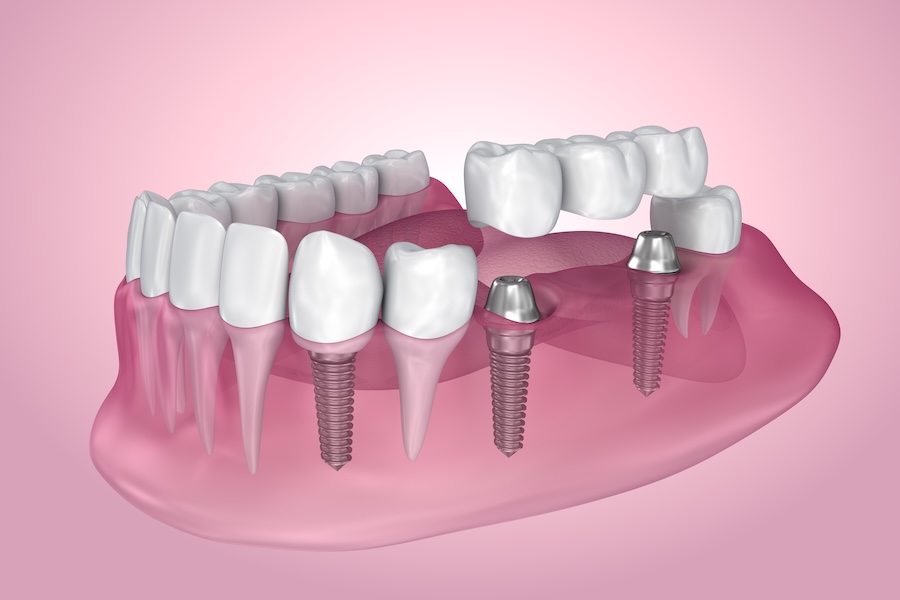
A dental implant replaces the root portion of a missing tooth. The implant itself is placed into the jawbone, where it heals and becomes stable enough to support a tooth above the gumline. Then, an abutment connects the implant to the crown, bridge, or denture that you see when you smile or chew.
For one missing tooth, the final restoration is usually a crown. If several teeth are missing in a row, implants may support a bridge instead. Meanwhile, if most or all of the teeth are missing, implants can also be used to give a denture more support.
Because the implant sits in the jawbone, it does not need the neighboring teeth to hold it in place. So, if those teeth are healthy, they may be left alone instead of reshaped for a traditional bridge. For someone who has already had quite a bit of dental work, that can mean one less reason to involve otherwise healthy teeth.
Replacing One Missing Tooth
A single dental implant is often used when one tooth is missing and the teeth on either side are still in good shape. The implant replaces the missing root, and a crown is made to fill the space above it. Once healing is complete, the crown is shaped so it fits with the surrounding teeth and meets the opposing tooth when you bite.
For example, if a back tooth was removed because of a crack or deep decay, an implant may be used to restore that space. After the implant heals, the crown lets that side of the mouth start chewing again instead of leaving the other side to handle most of the work. If you have been automatically shifting every bite away from the gap, you may notice how much easier it is once you can use both sides again.
A front tooth can also be replaced with an implant. In that area, Dr. Jason Greyslak or Dr. Rose Greyslak will look closely at the gumline, available bone, and space between the neighboring teeth. Then, the crown can be shaped and positioned so it fits naturally with the teeth around it.
Dental Implants After a Tooth Extraction
Sometimes implant planning starts before the tooth comes out. If a tooth is too damaged to save, the dentist can look at the root, bone, gum tissue, and any infection around it before the extraction. Then, while the tooth is being removed, they already have a clearer idea of what the site may need next.
In some cases, bone graft material may be placed in the socket at the same appointment. That helps preserve more of the ridge while the area heals. Depending on the bone and surrounding tissue, an implant may sometimes be placed right away, although other sites do better with healing time first.
So, if you already know a tooth may need to come out, ask about replacement before the extraction if you can. Dr. Jason Greyslak or Dr. Rose Greyslak can explain whether grafting is likely and whether the site may be ready for an implant sooner or later. That gives you a better sense of what the next few appointments may look like before the tooth is removed.
Replacing Teeth That Have Been Missing for Years
A tooth does not have to be recently lost for an implant to be considered. Plenty of people live with a gap for years and only start thinking about replacing it after chewing around it becomes second nature. By then, though, the bone and neighboring teeth may have changed.
When a natural tooth is present, chewing pressure travels through the root into the surrounding bone. After the tooth is gone, that stimulation stops, so the ridge can gradually become narrower or shorter. Because of that, a space that has been open for years may need a little more preparation before an implant can go there.
Nearby teeth may also drift toward the opening over time. So, Dr. Jason Greyslak or Dr. Rose Greyslak will check both the bone and the room available for the final crown. If the gap has tightened or the ridge has thinned, grafting or another step may need to happen first.
Using Implants for Several Missing Teeth
Dental implants do not have to replace every missing tooth with a separate post. If several teeth are missing next to one another, two or more implants may sometimes support a bridge across the space. So, a larger gap does not necessarily mean placing one implant under every replacement tooth.
For example, if three teeth are missing in a row, implants may be placed at each end to support the replacement teeth between them. The exact number depends on the location, the bite, the amount of bone, and how long the span is. Dr. Jason Greyslak or Dr. Rose Greyslak will look at how that whole section needs to handle chewing before deciding how many implants are needed.
This can also work when there are no natural teeth in the right spots to support a traditional bridge. Instead, the implants provide support underneath the replacement teeth. Meanwhile, the remaining natural teeth can stay out of the treatment unless they already need work for another reason.
Using Implants to Support a Denture
Traditional dentures rest on the gums, so some movement can happen while eating or speaking. Lower dentures, in particular, can become harder to keep steady as the jaw changes over time. You may start using more adhesive, taking smaller bites, or avoiding foods that used to be easy.
Implants can sometimes be placed in the jaw so a denture can attach to them. Depending on the restoration, the denture may snap onto the implants or be made as a more fixed prosthesis. With that added support, the denture relies less on the gums when you bite and chew.
If your denture has started to rock, lift, or move when you eat, mention that during your visit. Dr. Jason Greyslak or Dr. Rose Greyslak can check the denture itself and see how much bone is available underneath. Sometimes a reline or new denture is enough, while other patients may want more stability from implant support.
When a Traditional Bridge May Be Considered Instead
Dental implants are one way to replace a missing tooth, but they are not the only way. A traditional bridge uses the teeth beside the gap to support the replacement tooth between them. So, if those neighboring teeth already need crowns, a bridge may fit well with treatment that was already going to involve them.
If the neighboring teeth are healthy, though, an implant may allow them to stay untouched. Dr. Jason Greyslak or Dr. Rose Greyslak can show you which teeth would need treatment with a bridge and which could stay as they are with an implant. Once you see what each option would involve in your own mouth, the difference is easier to follow.
A bridge also does not require the same bone-healing period as an implant. However, the teeth supporting it need to be healthy and strong enough to handle years of chewing. So, those teeth get a close look before the dentist recommends one option over the other.
When a Partial Denture May Be Used Instead
A removable partial denture can replace one or several missing teeth without implant surgery. It uses the remaining teeth and gums for support, and it comes out for cleaning. For someone with several gaps in different parts of the mouth, a partial can replace more than one area at once.
However, a partial denture feels different from a fixed implant restoration. It can move some while you chew, and you need to remove it for cleaning. So, when you compare the two, it helps to think about what you would be comfortable managing during meals and at home each day.
Cost, bone support, medical history, and the condition of the remaining teeth can all affect the choice. Dr. Jason Greyslak or Dr. Rose Greyslak can explain how a partial would work in your mouth compared with an implant-supported option. Then, you can compare the daily routine along with the treatment involved.
Healthy Gums Before Implant Placement
The gums around an implant need to be healthy enough to heal and stay stable. If there is active gum disease, swelling, bleeding, or deep periodontal pockets, those problems may need treatment first. Otherwise, bacteria and inflammation around the area can make healing harder.
So, if your gums bleed regularly when you brush or floss, mention that during the implant evaluation. The dentist may recommend a cleaning or periodontal treatment before surgery. Then, once the gum tissue is healthier, the implant site can be checked again.
Needing gum treatment first does not necessarily take implants off the table. It may simply mean the gum inflammation needs to be brought under control before surgery. After that, Dr. Jason Greyslak or Dr. Rose Greyslak can continue with the implant plan.
Enough Jawbone Is Needed for Support
The implant needs enough bone around it to stay stable. So, Dr. Jason Greyslak or Dr. Rose Greyslak will use dental imaging to check the height and width of the jawbone where the tooth is missing. They will also look at nearby structures that affect where the implant can be positioned.
If the bone is thick and tall enough, the site may be ready for implant placement without grafting. However, if the ridge has narrowed since the tooth was removed, a bone graft may be recommended first. The graft adds volume where the implant needs more support.
This is common when a tooth has been missing for a long time. You usually cannot feel the ridge getting thinner, so the change may not be obvious until the area is imaged. Then, Dr. Jason Greyslak or Dr. Rose Greyslak can show you how much bone is there and whether grafting is needed.
Bone Grafting Before an Implant
Bone grafting adds material to an area that does not have enough volume for an implant. Depending on the site, grafting may be done when the tooth is removed or as a separate procedure later. Afterward, the area needs time to heal before the implant is placed.
Sometimes only a small amount of grafting is needed, while other areas need more rebuilding. Because of that, healing time can vary from one patient to another. Dr. Jason Greyslak or Dr. Rose Greyslak can explain how much grafting is needed and how much time should be allowed before the next step.
Once the area has healed, new imaging may be used to check the bone again. If there is enough support at that point, implant placement can go ahead. So, grafting may add an appointment and some extra healing time, but it can also make an implant possible where the ridge had become too thin.
How Dental Implants Heal
After an implant is placed, the surrounding bone gradually heals around its surface. This process is called osseointegration, and it is what gives the implant a stable foundation. Because of that, the implant usually needs time before the final crown, bridge, or denture starts taking normal chewing pressure.
Healing often takes several months, although the exact timing depends on the location, bone quality, grafting, and other factors. During that time, the implant stays in place while the bone becomes more closely connected around it. Then, once it has healed enough, the restorative part of treatment can begin.
If the missing tooth is in a visible area, Dr. Jason Greyslak or Dr. Rose Greyslak can also talk with you about temporary options. Not every temporary tooth works for every site, though. So, if you are concerned about having a visible gap during healing, bring that up early so you know what can be done.
The Final Implant Crown
Once the implant has healed, an abutment is connected to it and the final crown can be made. The crown is shaped to fit between the neighboring teeth and to meet the opposing tooth comfortably. Then, the bite is checked so one spot does not hit harder than the teeth around it.
For a front tooth, color and shape get extra attention because the crown needs to blend with the smile. For a back tooth, Dr. Jason Greyslak or Dr. Rose Greyslak will pay close attention to chewing pressure and how the crown meets the tooth above or below it. So, the crown is made to fit the specific location where the tooth was lost.
After the crown is placed, it may feel noticeable for a little while because the space has been empty. However, as you start using that side again, the new tooth should begin to feel more familiar. If the crown hits first when you bite or feels uncomfortable while chewing, call the office so the bite can be checked.
Cleaning Around a Dental Implant
A dental implant cannot get a cavity, but plaque can still collect around the gums and restoration. So, brushing and cleaning between the teeth are still part of life after treatment. The gum tissue around the implant needs regular cleaning just like the tissue around your natural teeth.
For a single implant crown, cleaning may feel a lot like cleaning a natural tooth. However, an implant bridge or implant-supported denture may need floss threaders, interdental brushes, or another tool. Our team can show you exactly where those tools need to go so you are not left guessing once you get home.
Regular dental visits remain important too. During those appointments, the dentist can check the gum tissue, bite, and implant restoration. Meanwhile, if the area starts bleeding, feeling sore, or trapping food differently, bring it up rather than waiting for the next routine visit.
Grinding and Clenching With Dental Implants
Grinding and clenching can put a lot of pressure on both natural teeth and implant restorations. Some patients already know they grind because they wake up with a tired jaw or have worn a nightguard before. Others do not realize it until the dentist sees worn enamel, chipped restorations, or other signs during an exam.
If grinding is present, Dr. Jason Greyslak or Dr. Rose Greyslak will take that into account when planning the crown and bite. The restoration may need to be shaped carefully so it does not take too much pressure. In some cases, a nightguard may also be recommended after treatment.
So, mention any history of jaw soreness, clenching, or chipped dental work during your evaluation. Even if you only notice it during stressful weeks, it is still relevant. That gives the dentist a better idea of how much force the new crown may be dealing with at night.
Medical History and Dental Implants
Dental implant placement is a surgical procedure, so your overall health needs to be reviewed before treatment begins. Conditions that affect healing, bone health, or the immune system may change how the procedure is planned. The dentist will also review the medications you take.
For example, diabetes does not automatically prevent someone from getting an implant. However, blood sugar control can affect healing, so Dr. Jason Greyslak or Dr. Rose Greyslak will want to know how it is being managed. Other medical conditions and medications may also affect when surgery is scheduled or whether another healthcare provider needs to be consulted.
Bring an updated medication list to your evaluation. Then, if more information is needed from another provider, that can be handled before surgery. It is easier to sort through those details early than stop halfway through planning because something still needs to be checked.
Smoking, Vaping, and Implant Healing
Smoking can interfere with healing around an implant. Nicotine can reduce blood flow to the tissues, and that can affect how well the gums and bone recover after surgery. So, smoking history needs to be part of the discussion before implant placement.
Vaping and other nicotine products should be mentioned too. Even if you do not smoke traditional cigarettes, nicotine can still affect the tissues that need to heal. Be open about what you use and how often so Dr. Jason Greyslak or Dr. Rose Greyslak can plan with accurate information.
If nicotine use changes the timing or recommendation, the dentist can explain what that means before surgery is scheduled. Then, you can talk through what would need to happen before moving forward. That is much better than finding out later that nicotine has been affecting how the area is healing.
What Happens During an Implant Evaluation?
Dr. Jason Greyslak or Dr. Rose Greyslak will first examine the missing-tooth area, the neighboring teeth, the gums, and the way your teeth come together. They will also review your health history, medications, and any previous treatment in that part of the mouth. Then, imaging can show what is happening underneath the gums.
The imaging shows how much bone is available and where nearby structures are located. It can also show whether the ridge has changed since the tooth was removed. If the space has been there for years, the scan may explain why there is less room or less bone than there once was.
After the exam, the dentist can tell you whether the site looks ready for an implant or whether something needs to happen first. That might include an extraction, bone graft, periodontal treatment, or treatment for a neighboring tooth. From there, you can see what the process would actually involve in your mouth before deciding whether you want to move forward.
Dental Implants at Corvallis Dental Group in Corvallis, OR
If you are missing one tooth, several teeth, or dealing with a denture that has started moving more than it used to, dental implants may be one option to consider. Dr. Jason Thomas Greyslak and Dr. Rose Greyslak can look at the bone, gums, bite, and remaining teeth to see what is possible in that area. Then, if grafting or another step needs to happen first, they can explain where it fits.
Maybe the space is fairly new, or maybe you have been chewing around it for years and barely notice yourself doing it anymore. Either way, an evaluation can show what the area looks like now and what replacement options are still available. Call Corvallis Dental Group in Corvallis, OR, to schedule an implant evaluation with Dr. Jason Greyslak or Dr. Rose Greyslak and talk about replacing your missing teeth!