

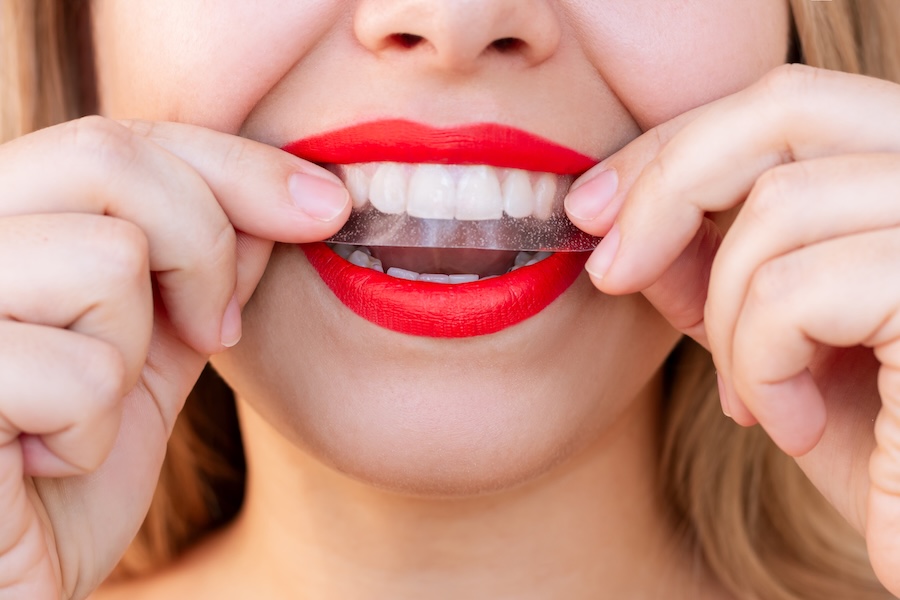
Whitening strips promise a brighter smile, but a few days of sensitivity can leave you wondering what they are doing to your enamel. You might notice cold water stinging even though you followed the directions. Temporary sensitivity can happen during whitening and often settles after treatment stops. Reputable strips are generally considered safe for healthy teeth when used as instructed, although overuse or an existing dental problem can cause trouble.
Before starting another course, bring the product details to us at Corvallis Dental Group in Corvallis, Oregon. We can review the ingredients and instructions along with any sensitivity you already have. A cavity, exposed root, or front-tooth filling may change the whitening advice. And if you have already started, we can discuss whether to pause or try a different approach.
How Whitening Strips Lighten Teeth
Most whitening strips contain hydrogen peroxide or a related peroxide ingredient. Once the gel contacts the tooth, it reacts with colored compounds within its structure. As those compounds change, the natural tooth can appear lighter. That goes beyond the surface stain a cleaning removes.
The formula, concentration, and time on the teeth affect the response. Products with the ADA Seal of Acceptance have been evaluated for safety and effectiveness when used as directed. However, directions from one box should not carry over to another. A product intended for a short application may irritate your teeth or gums if you leave it on longer.
When the shade changes slowly, you may wonder whether a second daily session would speed it up. However, extra applications increase exposure and can worsen side effects. They also do not guarantee that you will reach the shade pictured on the packaging. Follow the product’s schedule, and ask us before combining it with another bleaching treatment.
Why Cold Water Can Start to Sting
Peroxide can travel through tooth structure and temporarily irritate the tissues inside the tooth. During whitening, that can make cold drinks or even cool air feel sharper. The sensitivity often settles after you stop treatment, although the timing varies. The feeling by itself does not establish that enamel has permanently worn away.
However, whitening discomfort can overlap with symptoms from a cavity, crack, or exposed root. If one tooth hurts much more than the others, pain lingers, or it aches without a trigger, stop whitening and arrange an exam. We will check the tooth rather than assume the strips explain everything. Mention whether you had any sensitivity before starting them.
Even milder sensitivity can be a reason to pause. After checking your teeth, we may recommend a different schedule, a sensitivity toothpaste, or another approach. Before restarting, ask us whether your teeth have recovered and how long to wait. Continuing through pain is unlikely to make the rest of the process easier on your teeth.
Keep the Gel Off Your Gums
If a strip overlaps your gums, the gel can leave them tender or irritated. You might see a temporarily pale patch where the gel contacted the tissue. Remove the product and pause rather than applying another strip over the sore area. If irritation persists or is substantial, contact us for an evaluation.
Also, avoid stacking several whitening products into the same routine. Strips followed by a whitening pen or tray can expose teeth and gums to more peroxide than intended. The individual directions do not necessarily account for that combination. We can review the products together and recommend a plan based on your starting shade and sensitivity.
Be cautious with products that provide little information about their ingredients or manufacturer. A promise of instant whitening says little about the ingredients, strength, or how often you can use it. Bring the packaging if you would like us to review it. We can also explain the professionally supervised whitening available at Corvallis Dental Group.
Check Teeth and Dental Work First
If you already avoid ice water, have us check the sensitivity before adding whitening. Decay, cracks, recession, and worn areas can make some tooth surfaces more vulnerable to irritation. Addressing those problems may change which product or timing we recommend. It can also prevent you from mistaking an existing tooth problem for a whitening side effect.
Visible fillings, crowns, veneers, and bonding generally keep their original color while natural teeth lighten. As the surrounding teeth lighten, a front-tooth restoration that blends now may stand out. We can discuss the likely color difference and any future replacement before you start. If you plan to replace that restoration, we can coordinate its shade with your whitening treatment.
A single tooth that has darkened after an injury also needs its own assessment. Whitening the entire smile may not address its cause. Meanwhile, surface stain from coffee or tea may improve with a cleaning. Once we see the teeth, we can explain what whitening is likely to change.
Uneven Whitening and Strip Fit
Strips are made to fit a range of smiles, so rotated or overlapping teeth may receive uneven gel contact. You might see one area lighten while a tucked-in surface stays darker. Even with more applications, the strip can keep missing that same spot while increasing exposure elsewhere. Ask us about the fit before extending the treatment yourself.
We offer professional teeth whitening and can discuss a supervised approach based on your tooth positions, dental work, and sensitivity. We will also go over how to maintain the result. Over time, coffee, tea, and other exposures can add color again, so ask how long to wait before another whitening course. Check the repeat-use instructions and ask before starting another course if your teeth have been uncomfortable.
Whitening Advice in Corvallis
Pause whitening and arrange a visit with us at Corvallis Dental Group in Corvallis, Oregon if the strips have left your teeth uncomfortable. Dr. Jason Greyslak or Dr. Rose Greyslak can check for existing tooth problems and review the product you used. Bring the packaging or a photo of its instructions so we can discuss the application time and strength. If you have yet to start, ask about likely shade changes and how existing dental work may look afterward. Come in with your whitening questions and the smile you have in mind!